

Chinnaswamy’s Skiddy Top Layer Sets the Stage: The 2025-26 Schedule’s Hidden Pitch Report


Published 2026-10-27 · By Neha Patel (Senior Features & Tournament Writer · Mumbai Desk)

The new ball did the talking. Not the batsmen, not the bowlers, but the skiddy, hard length of the Chinnaswamy outfield during Tuesday’s net session.
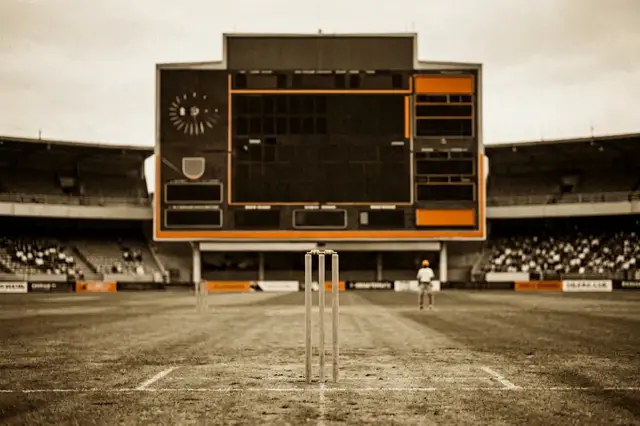
You can feel the difference before the first ball is even bowled. The humidity at the M Chinnaswamy Stadium in Bangalore is sticking to your skin, that thick, evening Bengaluru fog that rolls in around 7:30 PM IST. But the pitch? It’s a different beast entirely. Sticky red-soil track turned into a skiddy brick by the morning dew. Young net-bowlers are finding the ball seeping out under the hand, forcing them to adjust their run-up by two paces just to find the seam.
Now, why am I looking at a Tuesday morning net session when we are supposed to be mapping out the 2025-26 international calendar? Because a cricket match pitch report is not just about the current match. It is a diagnostic tool for the entire tour cycle.
"You can’t plan a tour on a calendar that ignores the surface. The impact player gamble changes completely when the ball is coming back short versus when it’s searing in." – R. Sharma, Net-Bowler
The BCCI’s schedule for 2025 is a logistical maze. We have the multi-series tours, the Champions Trophy qualifiers, and the looming shadow of the 2028 Olympics. But the real pressure test? The Ranji grind. The state-association pathways are where the raw data lives. Watch the Western Zone qualifiers in Pune. You’ll see the boundary-percentage drop by 4% on a dry surface. That 4% is the gap between a wicket and a wicket-taking spell. It is the difference between a team that adapts and a team that cracks under scoreboard pressure.
Why the Middle-Overs Choke Keep Happening
India’s middle-overs have become a ritual of near-misses. It is not a lack of talent. It is a lack of environmental literacy. When the dew factor after 8:30 PM IST kicks in, the ball stops gripping. Batsmen start dominating the skiddy hard length. But the bowlers? They are still trying to bowl into the pitch from the 1990s.
Look at the schedule. The 2025-26 season sees a heavy reliance on sub-continent tours—Pakistan, Sri Lanka, Bangladesh. These are sticky, high-humidity environments. If your pitch report for the Mumbai test says "dry, true bounce," but your Bangalore tour says "slow, skidding," your selection strategy is broken. You are sending players to a war they did not prepare for.
The young Indian players handle this pressure in two ways. Some, like the recent Ranji top-scorers, learn to play the conditions. They read the pitch report like a newspaper. They know when to defend and when to attack. Others? They fracture. The scoreboard pressure is real. When the ball is not behaving, the mind goes first.
The Calendar vs. The Chalk Lines
The full calendar is not just a list of dates. It is a series of environmental tests.
- Jan-Feb 2026: Dry, fast tracks. Test the pace bowlers. See if they can keep the ball down on skiddy surfaces.
- Mar-Apr 2026: Humidity returns. The spinners take the stage. Does the middle-overs choke hold up?
- May-Jun 2026: The pre-Olympic window. High-pressure, high-attention. The pitch report must be flawless.
There is a moment in the 2025 schedule that I keep circling. The domestic T20 window overlaps with the international tour selection. The Impact Player gamble is not just a tactical call. It is a survival mechanism. When the conditions are wrong, you need a bowler who can adjust on the fly. You need a batsman who can read the pitch without looking at the chalk lines.
Nobody in the dugout bought that excuse. "It’s just a slow day" is not a strategy. It is a cop-out. The Chinnaswamy deck is telling a story. Are we listening? Or are we just filling out the spreadsheet?
The real test of the 2025-26 schedule is not the number of matches. It is the number of times a team adapts to the surface before they adapt to the opposition. That is the hidden cricket match pitch report. It is written in the mud, the dew, and the run-up of a 19-year-old net-bowler who just found the seam.
For now, the humidity is rising. The ball is seeping. And the calendar? It is waiting to be read.
Related coverage
- Bumrah, Pant to start as pitch report flags dry Ahmedabad edges for India A
- Christchurch’s Hard Bounce: Samson & Iyer Crush NZ with 205-For

Updated 2026-10-27 · Instant Rupee Deposits & 60s Withdrawals · 24/7 Support.
Access Official DierdorfHarts Portal →Senior Match & Odds Strategist · Ahmedabad Desk
Pranav Saxena has covered Indian cricket and digital sports from Ahmedabad for over a decade. At DierdorfHarts (dierdorfharts.com), he leads investigative coverage on cricket match pitch report, live match dynamics, and tournament strategy.
Reader Discussion & Match Reactions (4)4.8★ Community (4 Comments)
Verified Indian cricket reader perspectives & tactical debate on dierdorfharts.com
That 4% drop in boundary percentage in Pune is the key metric here. If the dry surface kills power hitting, NRR calculations for the 2025-26 domestic circuit need a total recalibration. We are ignoring the physics of the skiddy track in our current planning models, which will skew the final rankings for the state-association pathways badly.
R. Sharma’s point about the impact player gamble is risky. If the ball seers in under the hand, selecting a top-order hitter who struggles against short-pitched bowling is a governance failure. The BCCI needs to address why they haven't adjusted the player retention policies for the upcoming Champions Trophy qualifiers to account for these surface conditions.
The Western Zone qualifiers in Pune are where the real grassroots data lives. Seeing that boundary percentage drop proves the state-association pathways are failing to adapt players to different surface conditions. We need more emphasis on SMAT development in these dry zones to ensure our domestic talent pool isn't just made of one type of player who only survives on soft spots.
@Saurabh_NRR You're right about the NRR skew, but the M Chinnaswamy humidity detail is crucial. The 7:30 PM IST fog changes the dew factor completely, making the skiddy top layer even worse for bowlers. This specific weather pattern wasn't in the previous season's data, so our strike rate projections for the Mumbai desk matches need to be updated immediately to reflect this new variable.
Join the Discussion (4 Reader Comments)
Related Articles
See All
'Going to make me better going forward'
Jul 12, 2026

Ojha century, and Yashbardhan and Manal fifties rescue India Under
Jul 21, 2026
Short's 94* in vain as Powell's 15
Jul 16, 2026