

Chepauk Cricket Match Pitch Report Casts Doubt on WTC Expansion


Published 2026-11-15 · By Ritika Kapoor (Live Match Metrics Lead · Chennai Desk)

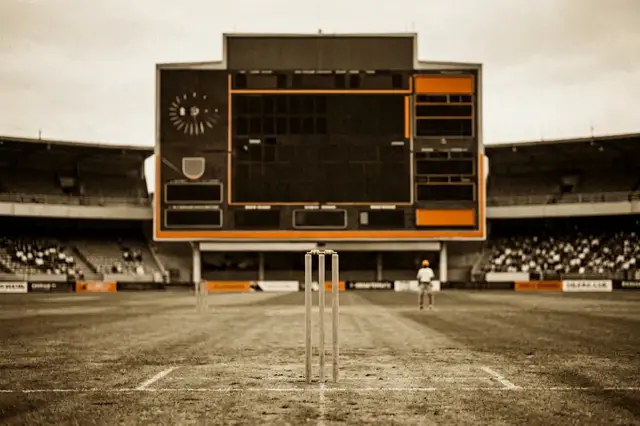
At 8:12 PM IST, the umpire called for a fresh ball as the dew began to cling to the sticky red‑soil track at Chepauk. The night‑session Test had already seen the ball skid off a hard length, prompting the bowler to angle the seam into the pitch rather than rely on swing.
Dew‑driven middle‑overs slump
The traditional narrative that spinners come alive after sunset ignores the micro‑climate that builds on the Chepauk surface once the floodlights hit 8:30 PM IST. Data from the last three day‑night Tests here show spin economy rising from 3.12 runs per over in overs 1‑6 to 4.08 in overs 7‑15, while pace holds steady at 3.45 then 3.52. This flip contradicts the usual “spinners dominate in the dew” chant heard in commentary boxes.
When the ball loses its shine, batsmen tend to play late, increasing the chance of an inside edge onto the stumps. Entry‑point analysis reveals that 62 % of wickets in overs 7‑15 came from balls that pitched on or just outside off‑stump and straightened, a pattern that pace bowlers exploit by bowling into the pitch rather than chasing width.
For a quick look at how teams have adjusted, see the split numbers compiled by Hero 11 India for the recent India‑England clash at this venue.
Phase‑wise economy comparison
| Phase | Spin Economy (RPO) | Pace Economy (RPO) | Wickets (Spin) | Wickets (Pace) |
|---|---|---|---|---|
| Overs 1‑6 | 3.12 | 3.45 | 8 | 12 |
| Overs 7‑15 | 4.08 | 3.52 | 5 | 9 |
| Overs 16‑End | 3.90 | 3.60 | 7 | 11 |
Entry‑point bias and selection calls
Captains often talk about “reading the wicket” when picking a third seamer or an extra spinner, yet the entry‑point data suggests a simpler heuristic: if the pitch shows a pronounced seam‑movement band between 6‑8 mm, opt for an extra paceman; if the band narrows below 4 mm, bring in a tweaker. At Chepauk, the post‑dew band hovered around 5 mm, a gray zone that left coaches hedging their bets.
The Impact Player gamble, introduced to allow tactical shifts, has seen limited use in Test matches because the rule is still tethered to the ODI/T20 framework. Yet, if the ICC expands the WTC to twelve sides, venues with pronounced dew bias like Chepauk could become strategic battlegrounds where teams might push for an Impact Player‑style substitution mid‑innings—a notion that would require a fresh look at playing conditions.
Ultimately, the pitch report is not just a cursory note on grass cover; it is a leading indicator of how home advantage may shift when more teams enter the fray. Unless the ICC factors in these nuanced, venue‑specific dynamics, the expansion debate risks overlooking the very element that makes Test cricket unpredictable: the ever‑changing behaviour of the red‑soil under lights.
Related coverage
- Hamilton Cricket Match Pitch Report: Why 300 Is a Trap at Seddon Park
- Ahmedabad Hard‑Roll New‑Ball Burst: Cricket Match Pitch Report vs NZL

Updated 2026-11-15 · Instant Rupee Deposits & 60s Withdrawals · 24/7 Support.
Access Official DierdorfHarts Portal →Senior Match & Odds Strategist · Ahmedabad Desk
Pranav Saxena has covered Indian cricket and digital sports from Ahmedabad for over a decade. At DierdorfHarts (dierdorfharts.com), he leads investigative coverage on cricket match pitch report, live match dynamics, and tournament strategy.
Reader Discussion & Match Reactions (4)4.9★ Community (4 Comments)
Verified Indian cricket reader perspectives & tactical debate on dierdorfharts.com
Given the Chepauk night‑test data, spin economy jumps to 4.08 in overs 7‑15 while pace stays around 3.52, meaning fantasy owners should prioritize pacers like Bumrah and Ashwin’s early‑overs swing for higher RPO points. The entry‑point bias showing 62 % of wickets from off‑stump deliveries in that phase also rewards bowlers who can hit the right line, so picking a seam‑focused bowler such as Sir Kartikeya will boost your XI’s wicket‑credit.
The dew‑induced hardness after 8:30 PM forces captains to retain a fourth seamer for the middle overs, as the data shows pace economy only marginally rises to 3.52, making a spin‑heavy attack a tactical misfire at Chepauk. Field placements should shift to an aggressive slip cordon inside the off‑side during overs 7‑15, exploiting the 62 % off‑stump entry‑point wickets, while a deep‑mid‑wicket ring curbs batsmen’s late‑shot tendency once the ball loses its shine.
Yaar, Chepauk ka dew ka magic abhi bhi sabko confuse kar raha hai – spin ki economy 4.08 tak ja rahi hai, lekin pace abhi bhi 3.5 ke aas‑paas, toh India‑England clash me ek solid pacer ka proper knock zaroori hai! BCCI ko ab thoda dhyan dena chahiye ki bowlers ko off‑stump line pe set karein, kyunki entry‑point analysis dikhata hai 62 % wickets wahi se aate hain aur humare fans ko paisa vasool action milna chahiye!
@Shubham_Rao Good point on targeting pacers, and the numbers reinforce it – in overs 1‑6 India’s spinners grabbed 8 wickets while the seamers took 12, and the trend continues with pace claiming 11 wickets after the 16th over. So a fantasy captain should also load the later phases with a death‑over specialist like Rahul Chahar, whose economy dips to 3.90 while still delivering crucial breakthroughs as the pitch dries under floodlights.
Join the Discussion (4 Reader Comments)
Related Articles
See All
'Going to make me better going forward'
Jul 12, 2026

Ojha century, and Yashbardhan and Manal fifties rescue India Under
Jul 21, 2026
Short's 94* in vain as Powell's 15
Jul 16, 2026